
How to Get the Best Print of Business Cards for Your Brand in Australia
Learn how to order the perfect print of business cards in Australia — from paper stock and finishes to MOQs, costs, and decoration tips.

Written by
Claire Bassett
Stationery & Office
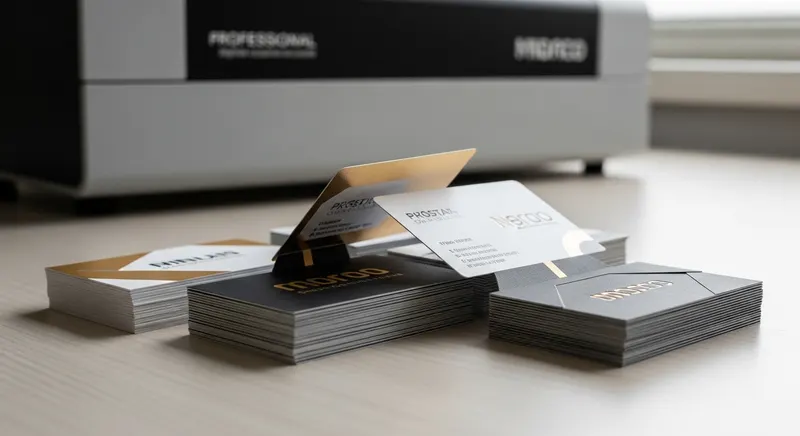
Getting the print of business cards right the first time can make the difference between leaving a memorable first impression and handing over something that ends up in the bin before the end of the day. In a world where digital connections dominate, a well-designed, quality-printed business card remains one of the most powerful physical touchpoints your brand has. Whether you’re a marketing manager in Sydney briefing a supplier, a sports club treasurer in Brisbane ordering cards for your committee, or a small business owner in Perth looking to professionalise your brand presence, understanding how the print process works — and what decisions shape the final result — is essential knowledge. This guide walks you through everything you need to know.
Why the Print of Business Cards Still Matters in 2026
It’s tempting to assume that business cards have been rendered obsolete by LinkedIn profiles and digital wallets. But the reality across Australian businesses tells a different story. Physical business cards continue to circulate at trade shows, client meetings, networking events, and conferences from Melbourne to Darwin. They signal professionalism and intent in a way that a phone swap simply doesn’t.
More importantly, the quality of your business card print reflects directly on your brand. A flimsy, low-resolution card printed on thin stock sends a subtle but real message about how much your organisation values its image. Conversely, a tactile, well-printed card with crisp colours and a refined finish communicates credibility before you’ve even spoken a word.
For marketing teams managing multiple touchpoints — from branded merchandise to signage — business cards are often an afterthought. They shouldn’t be. They’re one of the few branded items that travel with people well beyond the initial encounter.
Understanding the Print Process: Key Decisions That Affect Quality
Before you place an order, it’s worth understanding what actually goes into producing a quality print of business cards. Several decisions will determine the look, feel, and cost of your finished product.
Printing Method
The most common commercial printing method for business cards in Australia is offset lithography, which delivers sharp, consistent colour reproduction and is cost-effective at higher volumes. For shorter runs or highly personalised cards, digital printing is typically used — turnaround times are faster, and there’s generally no minimum order requirement.
UV printing is growing in popularity, particularly for organisations wanting standout results. It uses ultraviolet light to cure ink instantly, producing rich, vivid colours with excellent durability — ideal for cards that will be handled frequently.
Paper Stock and Weight
Card stock is measured in GSM (grams per square metre). Standard business cards typically sit around 300–350 GSM. Premium cards can go up to 600 GSM or beyond, and some suppliers offer double-mounted options where two sheets are laminated together for a luxurious, thick feel.
Coated stocks offer a smoother surface ideal for photographic elements or bold graphics. Uncoated stocks have a natural, textured feel that works well for minimalist or organic brand aesthetics — popular with health and wellness businesses, eco-conscious brands, and boutique operators.
Finishes and Special Effects
This is where the print of business cards really begins to differentiate itself. Common finish options include:
- Gloss lamination – A shiny, reflective surface that makes colours pop. Cost-effective and widely available.
- Matte lamination – Sophisticated and modern, with a soft, non-reflective surface. Very popular with Australian corporate brands.
- Soft-touch lamination – A velvet-like finish that feels premium in the hand. Excellent for high-end presentations.
- Spot UV – A glossy coating applied selectively to specific design elements (such as a logo), creating contrast against a matte base.
- Foil stamping – Gold, silver, or coloured metallic foil applied to specific areas, giving cards a luxurious, eye-catching quality.
- Embossing and debossing – Raised or recessed design elements that add a tactile dimension to the card.
If your organisation is already investing in quality branded promotional products — from branded tote bags to eco-friendly promotional products — your business cards should reflect the same standards.
Artwork Setup: Getting Your Files Print-Ready
One of the most common causes of delays and disappointing results in the print of business cards is artwork that isn’t prepared correctly. Here’s what to get right before you submit your files.
Resolution and Colour Mode
All artwork should be supplied at a minimum of 300 DPI (dots per inch) at the actual print size. Anything lower will appear pixelated when printed. Artwork should be set up in CMYK colour mode rather than RGB — RGB is designed for screens, and colours can shift significantly when converted for print.
If your brand uses specific PMS (Pantone Matching System) colours, communicate these clearly to your supplier. Many high-quality print suppliers in Australia offer PMS matching, particularly for offset printing runs.
Bleed and Safe Zone
Your artwork file should include 3mm of bleed beyond the trim line to prevent white edges appearing if the card is cut slightly off-register. Equally important is keeping all critical design elements — text, logos, contact details — at least 3mm inside the trim line as a safe zone. Small text sitting too close to the edge risks being cut off.
File Formats
Most Australian print suppliers accept PDF, AI (Adobe Illustrator), or EPS formats. PDFs are generally the safest option, as they embed fonts and preserve layout integrity across different software environments.
Minimum Order Quantities, Turnaround Times, and Budgeting
Understanding the logistics of ordering helps you plan effectively, particularly when coordinating across teams or multiple staff members.
Minimum Order Quantities (MOQs)
For digital printing, MOQs are often as low as 25–50 cards, making it practical for individual staff or small businesses. Offset printing typically becomes cost-effective at quantities of 250 and above. If you’re ordering for a whole organisation — say, a Sydney-based marketing team across multiple departments — consolidating orders into a single batch almost always produces better per-unit pricing.
Turnaround Times
Standard turnaround for business card printing in Australia typically runs 5–10 business days after artwork approval, depending on the supplier and finish complexity. Rush options are available from many suppliers but may carry a surcharge. If you’re ordering ahead of a specific event — a trade show in Adelaide, a product launch in Melbourne — allow sufficient lead time, especially if rounds of proof approval are expected.
Cost Ranges
Business card printing costs vary widely based on quantity, stock, and finish. As a general guide:
- 250 cards on standard 350 GSM gloss: approximately $30–$60
- 500 cards on matte laminated 400 GSM: approximately $60–$120
- Premium finishes (soft-touch, foil, spot UV): pricing increases significantly, often 2–3x the base rate
For larger organisations sourcing through a promotional products supplier or wholesale promotional products partner, bulk pricing tiers and account discounts can significantly reduce per-unit costs.
Pairing Business Cards With a Broader Stationery Suite
A standalone business card is valuable, but it’s even more effective when it’s part of a cohesive branded stationery suite. Consider how your cards align with other physical brand touchpoints your team regularly uses.
Branded pens are a natural companion to business cards, particularly at events and client meetings. If you’re sourcing promotional pens in bulk, ordering alongside business cards from the same supplier often streamlines the process and keeps branding consistent.
Custom notebooks and notepads are increasingly popular for meetings and conferences. Combined with business cards, they create a polished, professional impression that reinforces brand identity from multiple angles.
Lanyards and ID holders — common at conferences and expos — can also be colour-matched to your card design for a unified look. Other branded stationery accessories like tape with dispensers are useful additions for office environments and event setups.
For sports clubs, committee members often benefit from personalised cards bearing the club’s colours and logo — especially during registration seasons or community events. Pairing them with items like custom slap-on wristbands creates a memorable and functional membership kit.
Eco-Friendly Options for Sustainable Business Card Printing
More Australian businesses and organisations are looking to reduce their environmental footprint across all areas of branded collateral. Business card printing is no exception. If sustainability is a priority — particularly for not-for-profits, councils, or businesses with documented environmental commitments — there are several options worth exploring.
Recycled card stocks made from post-consumer waste are now widely available from Australian print suppliers. They offer a comparable print quality to virgin stocks and often carry FSC (Forest Stewardship Council) certification.
Uncoated or naturally textured recycled stocks align particularly well with brands that also favour sustainable promotional products and eco-friendly merchandise such as reusable coffee cups and reusable straws in their promotional mix.
Soy-based inks and water-based coatings are also available from many specialist printers and represent a meaningful step toward a more sustainable print process.
Tips for Ordering Business Cards for Events and Conferences
If you’re printing cards specifically for an upcoming event — whether it’s a Gold Coast industry conference, a trade show in Melbourne, or a regional expo in Cairns — a few additional considerations apply.
Plan to order early. Event seasons get busy, and suppliers across the country can experience lead time blowouts during peak periods. If you’re also sourcing promotional products in Cairns or other regional areas, confirming shipping times is equally important.
Consider ordering a proof or short-run test batch before committing to your full quantity. Many suppliers offer digital or physical proofs, and reviewing a printed sample is always preferable to discovering an error after 500 cards have been produced.
If staff members have recently changed roles or contact details, this is also the ideal time to audit your card data before sending to print. A small Excel error in a phone number costs a lot more to correct after the job is done.
Conclusion: Key Takeaways for Getting Your Business Card Print Right
Getting the print of business cards right requires more than choosing a template and hitting submit. It’s a multi-step process that rewards attention to detail, supplier knowledge, and a clear understanding of your brand standards. Here’s a summary of the most important points to take with you:
- Choose your printing method based on volume and intent — digital for smaller, faster runs; offset for larger, cost-efficient batches; UV for vibrant, durable results.
- Invest in paper stock and finish — these are the tactile elements that create a lasting impression, and they’re worth the extra investment for client-facing roles or senior staff.
- Set up artwork correctly from the start — 300 DPI, CMYK, with correct bleed and safe zones will prevent costly reprints.
- Plan for lead times, particularly around events or end-of-year periods when supplier capacity fills quickly.
- Think holistically — a business card works hardest when it’s part of a broader branded stationery and promotional merchandise strategy that tells a consistent brand story.
When you’re ready to explore the full range of branded promotional products that can complement your business card order — from customised tote bags to branded winter gifts for suppliers — take the time to work with a reputable Australian supplier who understands your brand and your market.