
Embroidered Branding: The Complete Guide for Australian Businesses and Sports Clubs
Discover how embroidered branding elevates merchandise for Australian businesses and sports clubs. Tips on products, costs, and ordering.

Written by
Yuki Tanabe
Branding & Customisation
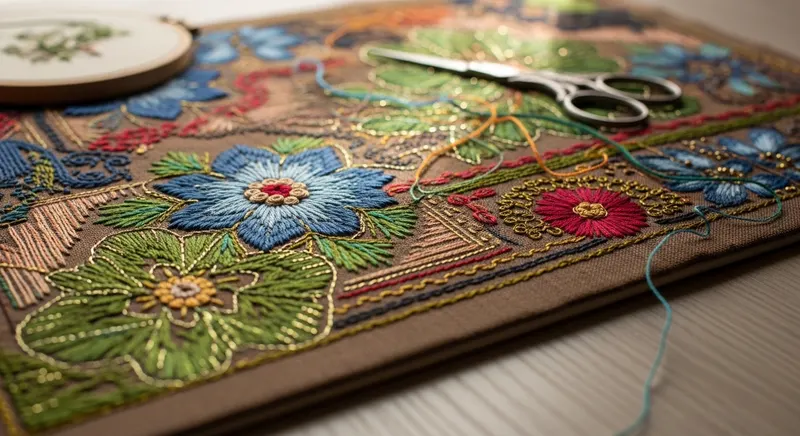
There’s something unmistakably premium about embroidered branding. Whether it’s a polo shirt with a neatly stitched company logo, a cap worn by a footy club member, or a fleece jacket handed out at a corporate retreat in the Blue Mountains, embroidery communicates quality in a way that few other decoration methods can match. For Australian marketing teams, businesses, and sports clubs looking to make a lasting impression with their branded merchandise, understanding how embroidery works — and when to use it — can make all the difference between merch that gets worn and merch that ends up in a drawer.
What Is Embroidered Branding and Why Does It Matter?
Embroidery is a decoration method that uses threaded needles to stitch a design directly into fabric. Unlike print-based techniques that sit on top of a garment, embroidery is physically woven into the material, giving it a three-dimensional texture and a visual depth that simply cannot be replicated by screen printing or heat transfer alone.
For branding purposes, this matters enormously. When a staff member wears an embroidered polo to a client meeting in Sydney’s CBD, or a junior footballer pulls on a cap with their club’s stitched logo in Adelaide, the embroidery signals that the organisation takes its presentation seriously. It’s a subtle but powerful cue.
How Embroidery Actually Works
Modern commercial embroidery uses digitised artwork files that programme an embroidery machine to stitch a design automatically. The process begins with artwork digitisation — converting your logo or design into an embroidery-specific file format (typically a .DST or .EMB file). This is handled by a specialist digitiser, and the quality of this step directly influences how sharp and clean your finished product looks.
Once digitised, the machine stitches the design using industrial polyester or rayon threads, available in thousands of colours that can be matched closely to your brand’s palette. Setup fees typically apply for new designs, usually ranging from $30 to $80 in Australia, though this is often a one-time cost if you’re reordering the same design in future.
Where Embroidered Decoration Really Shines
Not every product suits embroidery, but for the right applications, it’s the gold standard. Here’s where it performs best.
Corporate Apparel and Uniforms
For businesses across Melbourne, Brisbane, Perth, and beyond, embroidery is the go-to choice for corporate workwear. Polo shirts, dress shirts, fleece jackets, and softshell jackets all take embroidery beautifully. The stitching holds its quality through repeated washing, meaning your team can wear branded garments daily without the logo fading or peeling — a common issue with lower-quality print methods.
If your team attends trade shows, conferences, or client sites, embroidered uniforms project consistency and professionalism. A financial services firm in Canberra, for example, might outfit its entire advisory team in embroidered corporate polos — the kind of detail that clients notice, even subconsciously.
When planning your broader branded merchandise strategy, it’s worth thinking about how apparel fits alongside other items. Our guide to visual design elements for branded merchandise is a great starting point for ensuring brand consistency across your entire product range.
Sports Club Merchandise and Teamwear
Sports clubs are among the most frequent users of embroidered merchandise in Australia, and for good reason. Caps, beanies, training jackets, and supporter polos all benefit enormously from the durability and premium appearance of stitched logos.
For a Gold Coast surf club, a Hobart football club, or a Darwin netball association, embroidered merchandise does double duty — it functions as teamwear and as a revenue stream through supporter merch sales. Members and supporters are far more likely to purchase and wear an embroidered cap than a printed one, because it simply looks and feels better.
Bags and Accessories
Embroidery isn’t limited to apparel. Many bag types — particularly canvas totes, corporate backpacks, and gym bags — take embroidery extremely well. A neatly stitched logo on a quality branded tote bag instantly elevates the perceived value of the item.
Similarly, custom-branded tote bags intended for corporate gifting, conference giveaways, or retail brand merchandise benefit from the tactile quality of embroidery. If you’re putting together a premium gift pack for suppliers or key clients, pairing an embroidered bag with other carefully chosen items makes for a genuinely impressive presentation. You might also consider pairing these with winter branded gifts for suppliers for a cohesive seasonal campaign.
Gym and Fitness Merchandise
The fitness industry has embraced embroidered branding enthusiastically. Branded gym towels with an embroidered club or studio logo are a popular membership gift or retail product, and promotional yoga mats with embroidered carry bags add a premium touch to studio merchandise ranges. Gym owners in Melbourne and Sydney who invest in quality embroidered merchandise often report significantly stronger brand loyalty among members.
Embroidery vs. Other Decoration Methods: Choosing the Right Fit
Understanding when embroidery is the right choice — and when it isn’t — is essential for making smart purchasing decisions.
Embroidery vs. Screen Printing
Screen printing is ideal for flat surfaces and high-volume runs where cost is a primary concern. It handles large, bold graphics with multiple colours efficiently. However, it doesn’t carry the same premium feel as embroidery, and the print can crack or fade over time with heavy use.
Embroidery, on the other hand, lasts the life of the garment. It’s the better choice when:
- The item will be worn or used frequently
- You want to project a premium or professional image
- The design involves your logo or lettering (rather than a complex full-colour illustration)
- The product is made from fabric that takes stitching well (polos, caps, jackets, bags)
Embroidery vs. Heat Transfer and Sublimation
Heat transfer and sublimation are excellent for full-colour photographic designs and for fabrics where embroidery isn’t practical (such as lightweight performance wear or swimwear). But for logos and text on everyday workwear and accessories, embroidery remains the superior choice for durability and appearance.
Design Considerations for Embroidered Logos
Embroidery has limitations that other methods don’t. Very fine detail, gradients, and small text can be difficult to reproduce accurately through stitching. As a general rule, your embroidered logo should:
- Be at least 20mm in height for text to be legible
- Use clean, bold lines rather than intricate detail
- Avoid gradients or colour blends (solid thread colours only)
- Be simplified for small embroidery locations (such as chest logos on polos)
A good supplier will flag any artwork issues before production begins and may suggest small adjustments to ensure the best possible result.
Ordering Embroidered Products: Practical Considerations for Australian Buyers
Whether you’re a marketing manager at a Perth-based mining company, a school sports coordinator in Brisbane, or a volunteer club treasurer in regional Victoria, there are a few practical realities to understand before placing an embroidered order.
Minimum Order Quantities
Most Australian embroidery suppliers set minimum order quantities (MOQs) in the range of 6 to 12 units for garments, though this varies by supplier and product type. Caps often have lower MOQs than jackets. If you need just a handful of items — say, management shirts for a small leadership team — confirm with your supplier that your order volume is viable.
Turnaround Times
Standard turnaround for embroidered merchandise in Australia typically runs between 10 and 20 business days from artwork approval. If you have a hard event deadline — a conference, a product launch, a season opener — build in extra lead time and communicate the date clearly with your supplier. Rush services are sometimes available but may incur additional fees.
Stitch Count and Complexity
The cost of embroidery is partly driven by stitch count — how many individual stitches are needed to complete the design. A simple chest logo might require 5,000 to 8,000 stitches, while a large back design could exceed 20,000 stitches. Higher stitch counts mean longer machine time and, therefore, higher per-unit costs. When budgeting, ask your supplier for a stitch count estimate based on your artwork.
Colour Matching
Thread colours are matched using the Pantone or Madeira thread colour systems. While thread colours can’t perfectly replicate every PMS colour, a skilled digitiser can get very close. If brand colour accuracy is critical to your organisation, request a physical sample before committing to a full production run.
Complementary Products for Your Campaign
Embroidered garments rarely exist in isolation. Most organisations pair them with other branded items to create a complete merchandise suite. Depending on your campaign or use case, consider complementing your embroidered apparel with items like branded umbrellas, custom stationery, promotional stubby holders, event wristbands, or even slap-on wristbands for a fun activation element.
If sustainability is a priority — increasingly common for Melbourne councils, university departments, and corporate ESG programmes — pairing embroidered uniforms with sustainable promotional products or eco-friendly merchandise sends a strong and consistent message about your organisation’s values.
Building a Brief: What to Prepare Before You Order
A well-prepared brief saves time, reduces errors, and helps you get the best result from your supplier. Before reaching out, have the following ready:
- Vector artwork of your logo (AI, EPS, or high-resolution PDF preferred)
- Brand colour codes (Pantone, CMYK, or HEX)
- Product type and quantity — be as specific as possible
- Sizing breakdown — how many in each size (XS through to 3XL)
- Embroidery placement — left chest, right chest, back, sleeve, etc.
- Required delivery date and delivery address
- Budget range — per-unit or total
The more clearly you communicate your needs upfront, the smoother the process will be.
Conclusion: Key Takeaways for Ordering Embroidered Merchandise
Embroidered branding is one of the most enduring and effective ways to present your organisation professionally — whether you’re outfitting a corporate team in Canberra, kitting out a sports club in the Sunshine Coast, or creating premium supporter merchandise for a Sydney-based association.
Here are the key points to keep in mind:
- Embroidery is best for logos and text on fabric items like polos, caps, jackets, and bags — it offers unmatched durability and premium feel
- Design simplicity matters — clean, bold artwork with solid colours will produce the sharpest embroidered result
- Plan for lead times — standard Australian turnaround is 10–20 business days from artwork approval, so build in buffer for important deadlines
- Setup fees are a one-time cost — once your design is digitised, future reorders are typically cheaper without repeat setup charges
- Pair embroidered items with complementary products — think umbrellas, tote bags, stationery, and eco-friendly items to build a complete, cohesive merchandise suite
With the right brief, a quality supplier, and a well-considered product selection, embroidered merchandise can become one of the most powerful tools in your brand’s physical marketing toolkit.