
Custom Design Basketball Uniforms: The Complete Guide for Australian Sports Clubs
Everything Australian sports clubs need to know about ordering custom design basketball uniforms — from decoration methods to MOQs and budgeting.

Written by
Callum Briggs
Custom Apparel
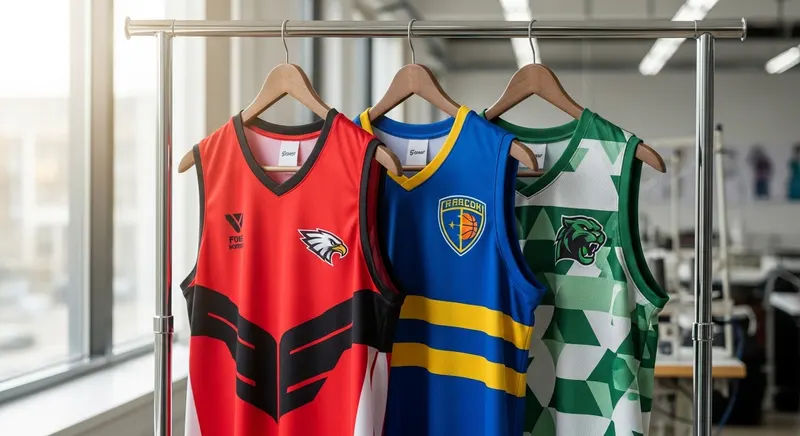
Ordering the right uniforms can make or break how your team looks and feels on the court. Whether you’re running a junior club in suburban Brisbane, a competitive rep team in Melbourne, or a corporate social league in Sydney, custom design basketball uniforms are one of the most important investments your club will make. They build team identity, boost player confidence, and give your organisation a professional edge that plain, off-the-shelf singlets simply can’t match. But with so many options — fabrics, decoration methods, colour combinations, and suppliers — the process can feel overwhelming. This guide breaks it all down so you can order smarter, budget better, and walk onto the court looking like the real deal.
Why Custom Design Basketball Uniforms Matter More Than You Think
There’s a reason professional teams invest heavily in their uniforms. A well-designed basketball kit does more than identify players — it signals intent. When your squad steps onto the court wearing a cohesive, polished uniform that reflects your club’s colours and branding, the psychological impact is real. Players feel unified. Opponents take you seriously. Parents and supporters in the stands instantly recognise your team.
For community clubs and associations across Australia — from Perth’s suburban leagues to the Canberra NBL development pathway — custom uniforms also serve a practical marketing function. Your logo, club name, and sponsor branding are on display every single game. That’s consistent, ongoing visibility that extends well beyond any individual promotional campaign.
Beyond aesthetics, custom basketball uniforms built from the right technical fabrics genuinely support performance. Moisture-wicking polyester keeps players cool through Queensland summers. Stretch panels allow unrestricted movement in the paint. Lightweight mesh construction improves ventilation during intense games. These aren’t just nice-to-haves — they’re features that affect how your players feel and perform.
Understanding the Key Decoration Methods for Basketball Uniforms
Before you dive into designing your uniforms, it’s worth understanding how your artwork will actually be applied to the fabric. The decoration method you choose affects durability, cost, visual impact, and turnaround time.
Sublimation Printing
For basketball uniforms specifically, sublimation printing is the gold standard. This method uses heat to infuse ink directly into the polyester fabric, meaning the design becomes part of the garment rather than sitting on top of it. The result? Vibrant, full-colour prints that won’t crack, peel, or fade — even after hundreds of washes and hours of court time.
Sublimation is ideal for complex designs with gradients, photographic elements, or multiple colours. It works best on 100% polyester or high-polyester-blend fabrics, which are also the performance materials most commonly used in basketball uniforms. This makes it a natural fit. The trade-off is that sublimation generally requires a full cut-and-sew manufacturing process, which means lead times are longer — typically four to eight weeks depending on your supplier.
Screen Printing
Screen printing remains a popular and cost-effective option for simpler designs. It works particularly well for bold logos, team names, and number applications on pre-made garment blanks. Setup costs per colour mean that this method is most economical when you’re printing large quantities with a limited colour palette. A club ordering 50 or more uniforms with a two or three-colour logo will find screen printing very competitive on price.
One consideration: on performance fabrics, screen printing inks can feel heavier than sublimation, and there’s more risk of cracking over time — particularly if uniforms are subjected to heavy training use.
Heat Transfer Vinyl (HTV) and Direct-to-Film (DTF)
These methods are increasingly popular for smaller runs or one-off custom pieces. Direct-to-film transfers allow full-colour designs to be applied without high setup costs, making them suitable for smaller clubs that only need 10–20 uniforms. Durability has improved significantly in recent years, though sublimation still leads for long-term performance wear.
Understanding the differences between decoration methods is just as important when you’re sourcing other branded team merchandise — you can explore how visual design elements influence print quality and decoration outcomes for a broader perspective on getting your artwork right.
Designing Your Custom Basketball Uniforms: What to Consider
Fabric and Fit
Start with function. Basketball uniforms need to move with the body, so look for fabrics with at least 5–10% elastane in the blend, or full stretch polyester performance fabric. Men’s, women’s, and junior cuts will all differ — make sure your supplier offers the sizing range your squad needs.
Junior clubs in particular should pay attention to fit options. A Gold Coast under-12s club, for example, will have very different sizing requirements to an adult community league in Adelaide. Many suppliers offer both traditional loose fit and more contemporary tapered cuts.
Colour and Branding
Most clubs have established team colours. When briefing your supplier, always provide your PMS (Pantone Matching System) colour codes rather than relying on what looks right on a screen. Monitor calibration varies, and what looks navy blue on your laptop might print as royal blue on the final product.
If you’re a newer club still building your brand identity, take time to develop a proper colour palette and logo before ordering. Rushing this step leads to costly reprints. If your club is also ordering supporting merchandise like branded tote bags for committee members or custom stubby holders for fundraising events, having a consistent brand identity ensures everything looks cohesive.
Numbering and Player Names
Player numbers are a standard requirement, and most suppliers offer sequential numbering as part of a bulk uniform order. Back numbers are mandatory; front chest numbers are common at higher levels. Adding individual player names on the back adds to the personalisation and appeal — particularly for rep-level or school teams — but does increase cost and complexity.
Sponsor Branding
Many community basketball clubs rely on local business sponsorships to offset uniform costs. Make sure you plan your design with sponsor logo placement in mind. Common positions include the lower front of the singlet, the back below the number, and the shoulder panels of shorts. Providing sponsors with clear mockups of where their branding will appear can also help you secure commitments faster.
Minimum Order Quantities, Turnaround Times, and Budgeting
MOQs
For full custom sublimated basketball uniforms, most Australian suppliers set minimum order quantities at around 10–12 full sets (singlet and shorts per set). Below this threshold, per-unit costs rise considerably. Screen-printed options on pre-made blanks can sometimes be ordered in smaller quantities, with some suppliers accommodating runs as low as five pieces.
If your club is small, consider whether you can combine uniform orders across multiple age groups or divisions to reach better pricing tiers.
Turnaround Times
This is where many clubs get caught out. Full sublimation uniform orders — especially those manufactured offshore — typically require four to eight weeks from proof approval to delivery. During peak periods like the start of a new season, domestic demand can push this out further.
Always build in buffer time. If your season starts in late March, aim to have your order confirmed and artwork approved by late January at the very latest. Clubs in Darwin and regional Western Australia should also factor in additional freight time.
Budget Considerations
A quality custom sublimated basketball uniform set (singlet and shorts) typically ranges from $60–$120 per set depending on complexity, quantity, and supplier. Ordering 30+ sets will generally bring the per-unit cost down noticeably. Setup fees vary — sublimation generally has lower setup costs than screen printing because it doesn’t require separate screens per colour.
If your club budget is tight, explore whether there are ways to offset costs through sponsorship, fundraising, or a player contribution model. Complementary revenue-raising products like slap-on wristbands for game day or branded gym towels can help clubs generate the funds they need for a premium uniform package.
Working With a Promotional Products Supplier
Not all uniform suppliers are created equal. Working with an experienced promotional products supplier that has specific experience in custom sportswear is critical. Ask to see examples of past basketball uniform projects, request a physical sample of the fabric and print quality before committing to a large order, and make sure you receive a digital proof (mockup) for sign-off before production begins.
Also confirm what the proof approval process involves — can you adjust colours or layout after the initial proof? How many revision rounds are included? These are important questions that affect both your outcome and your timeline.
Many clubs that order uniforms also invest in complementary merchandise for their end-of-season events and presentations. Winter branded gifts for club sponsors, branded stationery for administration, and eco-friendly sustainable products are all popular choices that align well with a professional club image. Clubs looking to build their green credentials might also appreciate reusable coffee cups or reusable straws as merchandise items.
For clubs that hold events or expos, don’t overlook related merchandise categories — branded umbrellas for outdoor events or custom tote bags for player kits are practical additions that reinforce your brand well beyond the court.
Conclusion: Getting Your Custom Basketball Uniforms Right
Custom design basketball uniforms are a significant investment, but when approached thoughtfully, they deliver real returns — in team pride, sponsor visibility, and on-court professionalism. The key is giving yourself enough lead time, understanding your decoration options, and working with a supplier who has genuine experience in custom sportswear.
Here are the key takeaways to keep in mind:
- Choose sublimation printing for full-colour, durable designs on performance polyester fabrics — it’s the superior method for custom design basketball uniforms
- Use PMS colour codes when briefing your supplier to ensure accurate colour matching across all garments
- Plan your timeline carefully — allow at least six to eight weeks for fully custom sublimated orders, especially at the start of season
- Leverage sponsor branding on your uniforms to help offset costs and give local businesses valuable exposure
- Work with an experienced supplier who can provide physical samples, digital proofs, and clear communication throughout the process
With the right preparation, your club’s next uniform order will be something your entire squad is proud to wear — every single game.